
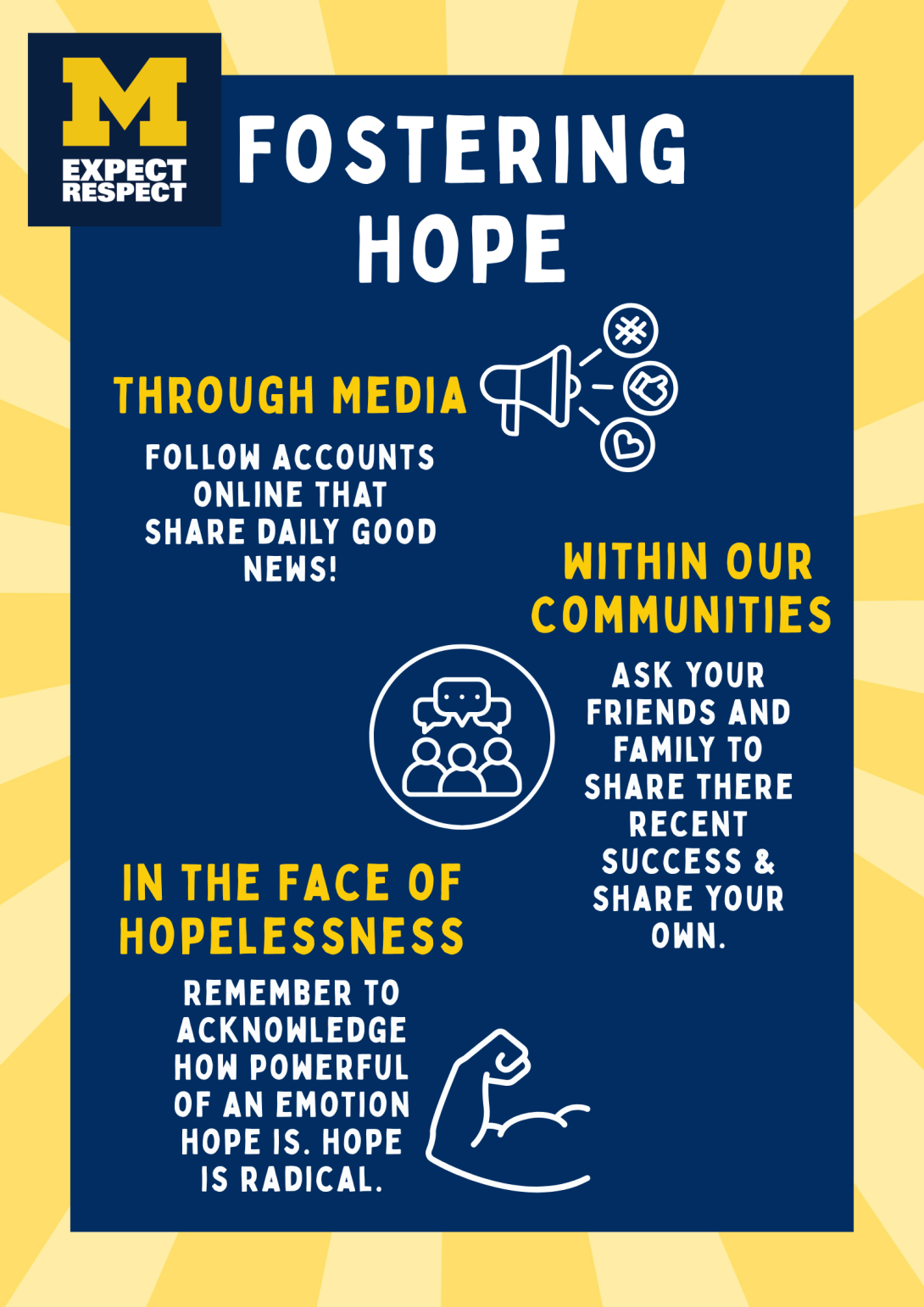
The University of Michigan’s Expect Respect program exists to promote a campus culture rooted in care, inclusion, and accountability. At its core, that work is about creating the conditions where hope can thrive, not just as a feeling, but as a practice.
Hope is often defined as a belief in the possibility of positive outcomes. It fuels persistence, creativity, and resilience. At times, hope can even feel radical.
But we also recognize that sustaining hope is not always easy. When we are navigating academic pressures, financial stress, global events, or personal challenges, especially while living off campus and balancing multiple responsibilities, hope can feel distant. Cultivating it takes intention.
Below are a few ways to actively practice hope, even during difficult seasons.
Hope and Media
In a digital world where news and commentary are constant, it is easy to become overwhelmed. Doomscrolling can quietly shape our outlook and make challenges feel insurmountable.
One way to protect your well-being is to be intentional about what you consume. Consider curating your feed to include stories that highlight problem-solving, community care, and progress. This is not about ignoring hardship. It is about balancing your perspective.
For example, the Good News Network shares global stories of resilience and positive change. On social media, creators like Jacob Simon post daily reminders of meaningful acts happening around the world. Incorporating even a few minutes of uplifting content into your routine can help replenish emotional reserves.
Hope grows when we choose to notice it.
Hope and Community
For many off-campus students, community can look different. You may not be surrounded by residence hall programming or daily campus touchpoints. That makes intentional connection even more important.
Hope often lives in small, everyday interactions. Consider exploring the meaningful work happening within your department, student organizations, or local Ann Arbor community. Research breakthroughs, creative projects, and service initiatives are unfolding all around you.
Just as importantly, share your own milestones. Whether it is completing a challenging week, securing an internship, or simply getting through a tough exam period, allowing others to celebrate with you reinforces collective resilience.
Communities are not built only in moments of crisis. They are built through shared wins, support, and mutual recognition.
Hope grows when it’s shared.
Hope and Hardship
It is also important to acknowledge that hope does not erase hardship. There are moments when hopelessness feels heavy and valid. Allowing yourself to name those feelings matters.
At the same time, staying anchored in that space indefinitely can deepen isolation. After giving yourself time to process, gently re-engage with practices that restore you. Reach out to a friend. Step outside. Revisit content that inspires you. Seek campus or community support if needed.
Hope is not about pretending everything is fine. It is about believing that movement, connection, and change remain possible.
Moving Forward With Hope
If your day-to-day life starts to feel overwhelming and negativity begins to seep in, take a moment to step back. Look around and intentionally identify something you can feel hopeful about, whether that’s something you find online, in the news, or within your own community. Carve out time to replenish your stores of hope.
Remember that cultivating hope is an ongoing practice, one that you don’t have to do alone.
Expect Respect remains committed to fostering a culture of care, kindness, and accountability at Michigan. To learn more about fostering a culture of care, kindness, and respect at Michigan, visit the Expect Respect website and explore ways to help build a campus community & collaborate with us!